

Abstract
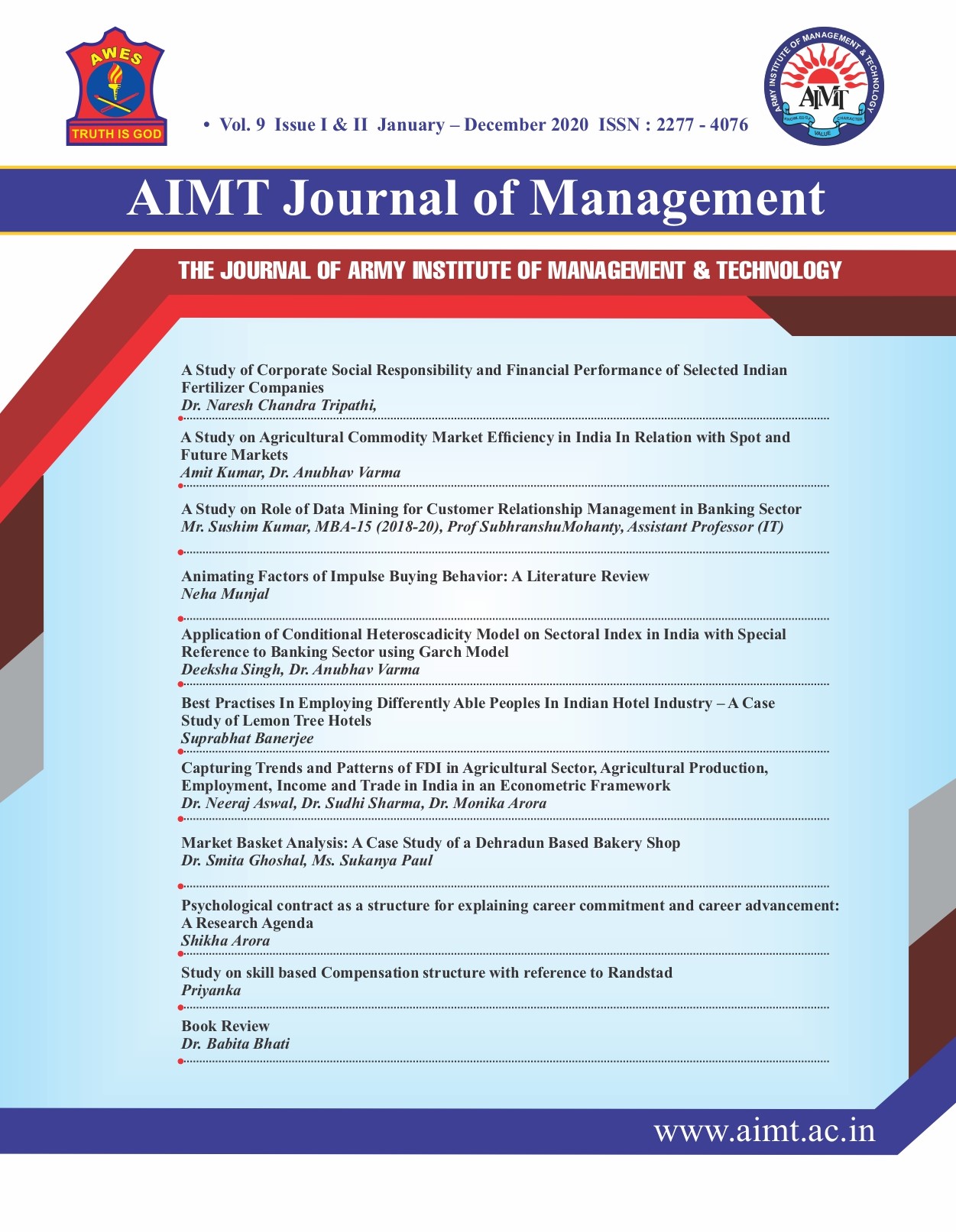
Employing differently able people (DAP) or people with infirmities is difficult to deal with in the Indian societal structure as it is still treated as a taboo.In India 26.8 million people are people with infirmities,30 per cent of whom live in urban areas, while 70% live in rural India, in accordance to the 2011 Population Census.,.Employment status of DAP in India is very disheartening, the Census 2011 report shows that only 36% are working. There are 47% male workers while only 23% of females are working in all over India. The RPWD Act, 2016 reserves for 4% jobs of Indian Government and PSU's in identified posts. Employability in Private sector by improvement of proper skills is being encouraged now among persons with disabilities. People with infirmities have been motivated to pursue skill training in light of the emerging number of job opportunities in the service sector. Market specific skill training set up has been designed by Skill India Council for the disabled. Numerous hotels in India are running as an element of their CSR (Corporate Social Responsibility) activities for various social causes but Lemon Tree Hotels has adopted this policy of employing DAP as a diversified manpower enlistment policy. This case study is trying to discover the possibilities and impact of employing
DAP in Lemon Tree Hotels and how other hotel can use it as role model for employing more DAP and making them feel inclusive in the society
Keywords
References
- 1. ZolaIK. Toward the necessary universalizing of a disability policy. The Milbank Quarterly, 1989,67:Suppl 2 Pt 2401-428. doi:10.2307/3350151 PMID:2534158
- 2. Ferguson PM. Mapping the family: disability studies and the exploration of parental response to disability. In: Albrecht G, Seelman KD, Bury M, eds. Handbook of Disability Studies. Thousand Oaks, Sage, 2001:373–395.
- 3. Mishra AK, Gupta R. Disability index: a measure of deprivation among the disabled. Economic and Political Weekly, 2006,41:4026-4029
- 4. World report on disability 2011. WHO Library Cataloguing-in-Publication Data.1.Disabled persons - statistics and numerical data.2.Disabled persons - rehabilitation. 3.Delivery of health care. 4.Disabled children.5.Education,Special.6.Employment,Supported.7.Health policy.I.World Health Organization. ISBN 978 92 4 156418 2 (NLM classification: HV1553).
- 5. Disable persons in India – A statistical profile 2016.http://www.mospi.gov.in
- 6. Gröschl, S. 2007. An Exploration of HR policies and practices affecting the integration of persons with disabilities in the hotel industry in major Canadian tourism destinations. International Journal of Hospitality Management, 26: 666-686.
- 7. Hammett, C.. 2003. The Dollars and Sense of Workplace Accommodation. Your Workplace, Oct./Nov.: 12-13. Judd, C., Smith, E. and Kidder, L. 1991. Research Methods in Social Relations. Orlando: Harcourt Brace Jovanovich.
- 8. Gröschl, S. 2005. Persons with disabilities: a source of non-traditional labour for Canada's hotel industry. Cornell Hotel ad Restaurant Administration Quarterly, 42 (2): 258-275.
- 9. Nickson, D., Warhurst, C. and Dutton, E. 2005. The importance of attitude and appearance in the service encounter in retail and hospitality. Managing Service Quality, 15(2): 195-208.
- 10. The Financial Times Limited, ft.com, 15March,2018.
- 11. Walsh, K. (2003). Qualitative research: Advancing the science and practice of hospitality [Electronic version].Cornell Hotel and Restaurant Administration Quarterly, 44(2), 66-74.Best Practises in Employing Differently able peoples in Indian Hotel Industry – A Case Study of Lemon Tree Hotels